
Dr. Gail Brenner

Sacred Space for Awakened Living

TwitterYoutubeFacebookGoogle +
  • Home
  • About
    • About Gail
    • Start Here
    • Testimonials
    • Professional Bio
  • Read
    • Blog
    • Archives
    • Friday Inspiration Newsletters
    • Guest Posts
  • Watch
  • Listen
    • Downloadable Guided Meditations
    • Interviews
    • Calm Center Online Conversations—Recordings
  • Events
  • Work with Me
  • Books
    • Suffering Is Optional
    • At the Core of Every Heart
    • The End of Self-Help
    • The End of Self-Help—Guided Audio Meditations
  • Contact

Don’t Believe It!

“The mind creates the abyss, the heart crosses it.”
Sri Nisargadatta Maharaj

What do you believe about yourself that keeps you feeling small, unworthy, incapable, or damaged?

Whatever you were told about yourself that defeats you, whatever you have come to identify as your flaws: Don’t believe it!

You were responsible for your mother’s alcohol use? You ruined everything by being born? Your sister is better than you? You shouldn’t reach for the stars?

Take any self-sabotaging assumption – and Don’t believe it!

Believing these untruths is the beginning of a downward spiral that we are all familiar with. In our minds, we create a reality that seems so real that we sacrifice our talents, inner clarity, health, and well being. Subtract these beliefs, and you will find unlimited treasures of possibility, sanity, and peace.

As you explore the smudges on the window that keep you from seeing clearly, can you have great compassion for yourself? No need to add a layer of self-blame for holding on to these beliefs. All it takes is this: start where you are, and cultivate a deep willingness to see through to the truth.

How Did I Get Here?

If you don’t have your own, spend some time with young children, maybe at a playground. They are so open and impressionable. This was you at 8 months or 5 years – open and impressionable. You were totally receptive to absorbing all of the messages that came your way from people around you. And sometimes those messages were unsupportive and defeating.

Young children are naturally self-focused, the center of their universe. Everything that happens is interpreted through a filter of “me.”

A young child isn’t capable of understanding the reasons why a parent would ignore or abandon her. She assumes it is her fault and takes on the identity of worthlessness. A parent says, “You’re no good;” a child can’t see that the parent feels inadequate, so takes the statement at face value.

Prior to these self-beliefs, we are confident and curious. After these beliefs set in, we feel contracted and limited. We scurry to find ways to cope with a life situation that seems frightening, aggressive, or empty. And the result is layers of conditioning that make lightness and joy seem unattainable.

Remember the lightness and joy? They are in there, I promise you.

The Process of Untangling False Beliefs

I don’t mean to be flippant by saying, “Don’t believe it.” For most of us, it takes some time to untangle these deeply-held mindsets we carry around. Ultimately, though, a thorough and precise investigation into these beliefs reveals that they simply aren’t true. When this is understood in all aspects of your being, the palpable result is freedom, a reclaiming of your natural self prior to conditioning.

Unwinding these beliefs is usually a process. Once you begin to pay attention to them, you see that each time they arise presents an opportunity to investigate how they operate in you. Each moment of investigation is a chink in the armor you have built around you.

Identify the Beliefs

How to investigate these core beliefs? Begin by identifying them. Signs of a hidden belief include depression, anxiety, strong emotions, conflict in relationships, general dissatisfaction, hopelessness. Take your current experience as the starting point, and use your loving attention to highlight the story you tell yourself. What do you believe about yourself and other people that leads to your unhappiness?

Say you feel lonely. You might be telling yourself: I can’t make friends; I’m unlovable; There’s something wrong with me if I’m alone. Once you have discovered these beliefs, you are ripe for investigating them.

Go to the Source

Think back to illuminate how these identities took hold of you.

  • Who said these statements to you?
  • What circumstances occurred that led you to believe them? Take your time here so you can understand exactly how these perspectives lodged in you.
  • Now step into the shoes of people who were less than supportive toward you. What was happening for them that led them relate to you in the way they did? How were their hearts closed? Can you see how it was not your fault?

Integrate Your Discoveries

Return to the core beliefs and consider them in light of what you have just discovered. These identities may not feel so solid in you now. Maybe you will notice that you took as true a critical statement that was made because of someone else’s confusion.

Allow yourself to question the beliefs. Do they fit all of you? Can you find the part of yourself that is still alive and has not been affected by them?

The Emotional Aspect

Inherent in a self-defeating belief is a state of lack. Something about you doesn’t feel good enough, important enough, confident enough. As you now know, this feeling of lack originated early on in your life, and there may still be a part of you craving the love and attention you missed.

The final phase for releasing a belief often includes recognizing this place of lack and filling it up with love and attention. Where does this love and attention come from? From your own precious heart. You have within you the capacity to heal the apparent deficiency.

Open your heart to fill up all parts of you that are waiting to be seen in love
. Pour it on like a waterfall, and let yourself drink it in in every cell. This is the remembering of your natural, full, unconditioned being.

Every time the contraction around a belief arises, the sadness and despair, you have an opportunity to fill with love even more deeply.

It was Jesus who said, “for you shall know the truth, and the truth shall make you free.” Tell yourself the absolute truth, especially about those unexamined beliefs that seem so real.

Know yourself, as you are, and you are free.

You are welcome to check out some other articles I’ve written about beliefs here and here.

 

How to Meditate

clouds“The moment one gives close attention to anything, even a blade of grass, it becomes a mysterious, awesome, indescribably magnificent world in itself. “Henry Miller
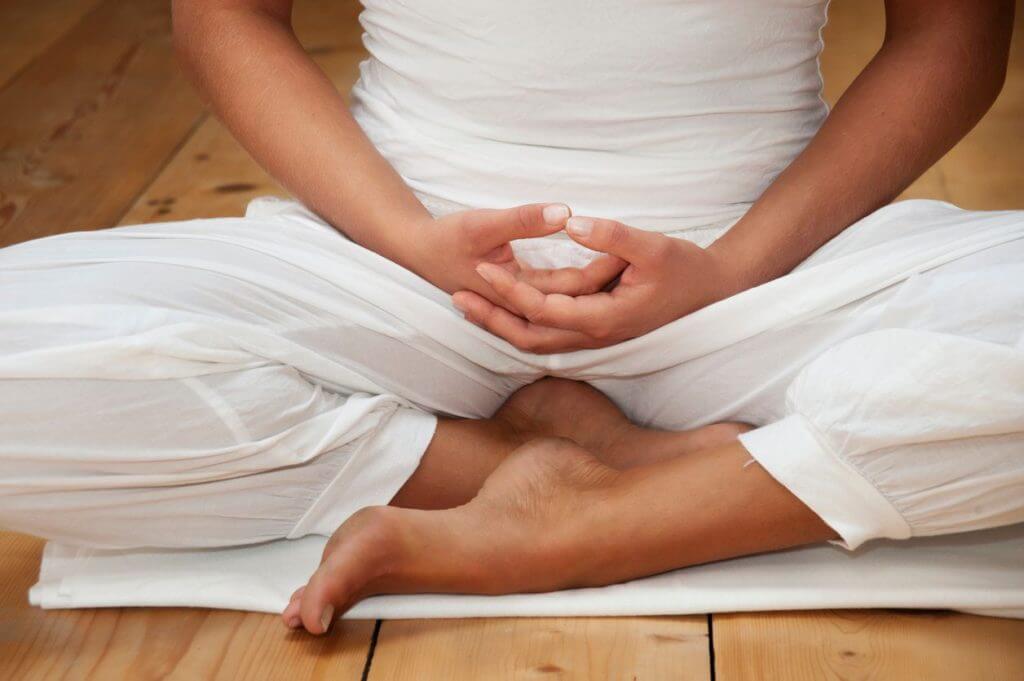

In the last post, we talked about the purpose of meditation. I mean the real purpose. Sure, meditation can lower blood pressure, improve sleeping, and help people cope with physical pain. These are not small benefits and are valid reasons to meditate.

The Role of Meditation

But if what we want is freedom from self-defeating habits of all kinds and the realization of enduring happiness and peace, the practice of meditation can be a huge support.

There is no law that says we must meditate or we must know ourselves. The choice is completely ours. Some people avoid it like the plague, and others simply aren’t interested. But for those lucky ones (you?) who want to be truly happy and cannot help but ask the big questions, meditation is a tool that helps to shed habits and realize freedom.

When we are under the influence of our habitual patterns, inner discovery is next to impossible. Take an alcoholic as an example. Could he possibly see what is driving his need to drink while sitting at the bar with a gin and tonic?

Substitute for “alcoholic,” procrastinator, commitment-phobe, overeater, or self-deprecator, and you will discover your version of avoidance. When we allow the momentum of our patterns to carry us, we are too involved to see how they actually operate.

Freedom Is Possible

Simply sitting in quiet on a regular basis becomes a refuge of sanity from the pressure of our habits. It provides the space for us to stop and see what we are actually experiencing. It is a step away from the endless hamster wheel.

We learn that thoughts are just thoughts, feelings just feelings, and that we don’t need to react. It is so amazing to see that we can feel angry or recognize a recurring story of woe in our minds and we don’t need to do anything. We are simply present.

This is the freedom that stopping makes possible. Our choice is this: we can stay blind to what motivates us and continue playing out habits, or we can stop, notice what we are thinking and feeling, and allow those experiences just to be present.

The How-To

Meditation is extremely simple – we sit quietly and allow everything to be as it is. Whatever we experience, we simply see it without doing anything to it. We might notice physical sensations, sounds, thoughts, or feelings that may be subtle or strong. We might notice urges to do something or tendencies to resist or avoid.

Our job in meditation is simply to be aware of these comings and goings without involving ourselves. We may feel the urge to move our attention in a given direction, but instead of acting on the urge, we stay still and allow it to unfold. That’s all there is to it.

You can think of yourself as the boundless sky. Clouds and weather pass through, but the sky is present, unmoving, unaffected.

For many of us what I am suggesting is easier said than done. The point of meditation is not to instigate a fight with what we experience. It is to be with what is. If avoidance or self-criticism appears, then that is the experience to receive in that moment. If you feel a fight brewing, then be with those feelings, thoughts, and body sensations.

When we meditate, we have a neutral, friendly attitude to everything that arises – the hard experiences as well as the mundane and blissful ones. Most of us wish to be accepted unconditionally by people. Meditation is the opportunity for us to be unconditionally accepting of ourselves, of every experience that arises in the moment. All are welcomed in the space of open awareness.

The Nuts and Bolts

Start to meditate by setting aside a few minutes for yourself. If the idea of meditating scares you, just try it for maybe five minutes, eventually working up to fifteen minutes or more. The idea is to be alert, awake, attentive, open, and receptive.

Settle your body into a comfortable sitting position, and close your eyes. Once you are settled so your body can be still, begin to pay attention to your breathing. This, alone, can be amazing. Simply track your inhale and exhale. Notice what happens around your nose, chest, back, and belly. All you are doing is noticing.

Another way to start is to open to sounds. Let your awareness be receptive to any sounds that appear, close or far. Be the still point in the center, and allow the sounds to come to you.

After a minute or so, let go of paying attention to the breathing or hearing sounds, and open your attention completely to everything that arises. You might notice thoughts, feelings, and sensations in your body. Just be a loving presence.

Thinking Is Not a Problem

At some point, you are likely to notice that you have gotten caught up in thinking about something. This is completely natural, and not a problem. When you realize you have been lost, simply shift your attention back to the space that receives everything.

This may happen thousands of times, if not more. Still not a problem. Each time, gently return to loving awareness. This is the movement to presence that stems the momentum of playing out habits unconsciously. This momentum is highly conditioned, so it takes some time to soften. Be kind with yourself.

One of the misunderstandings about meditation is that the goal is to stop thinking. You will realize that this is impossible. Thinking may stop, but it happens on its own and not because you are doing anything to make it stop. Thinking is part of experience, and all experiences are welcomed unconditionally.

No Goal

The goal is not to get anywhere or accomplish any particular state, including states of rapture or bliss. The “goal” is simply to be with what is. Be awake to the ordinary, everything as it is.

Meditation serves as long as it is needed. Some people have been meditating daily for decades and for others the practice comes and goes. There is no assignment or “should” about it. If you feel moved to meditate, then enjoy. If not, life will bring you exactly what you need in some other form. If you are aware of avoiding meditation out of fear, you may consider examining your resistance.

In the ultimate state of awakeness, meditation is the enduring way of being. Even the concept of the meditator falls away, and all that exists is pure awareness. Thoughts and emotions may come and go, but awareness, you, remains untouched. This is what Adyashanti calls true meditation.

If you haven’t meditated before, give it a try. I’d love to hear how it goes. If you are a seasoned practitioner, feel free to share your experiences. Any questions are always welcome and will help everyone.

Next post: guided audio with a period of silence to support welcoming your own experience in meditation.

image credit: twoblueday

Meditation Is a Gift to Yourself

Note: You may want to check out the interview with me on Armen Shirvanian’s blog, Timeless Information. He posed some great questions that I enjoyed responding to.

“The cave you fear to enter holds the treasure you seek.”
Joseph Campbell

As I look back, I can see that meditation saved me. Before I started meditating, I had had many years of therapy, but somehow I still wasn’t happy. It was 1995 (ages ago!). I had been reading about Buddhism for a year, but was avoiding meditation like a peeping tom avoids knocking on the door. I was curious and interested, but was too scared to actually sit in silence with myself.

I finally bit the bullet, and the true healing began.

Why Meditate

The beauty of meditation is that we intentionally stop the momentum of our patterns so we can see what we are really experiencing. When we unconsciously play out our habits and addictions day after day, year after year, nothing changes. We may try to modify our thoughts or analyze our childhoods, but the root of the problem still exists.

Meditation is the dam on the rushing river that allows us to discover what the swirls and eddies are all about. It puts an end to avoidance and rationalizing, and invites us to directly investigate our actual experiences in the moment and come to peace with them.

Sitting in quiet offers the possibility of deconstructing our habits. Over time, we begin to see that we run the same boring stories through our minds or that our bodies are wrought with tension that we never noticed before. These illuminating observations are almost impossible when we are traveling through our lives at warp speed.

How It Works

Say that you have a tendency to snack mindlessly at night. Most people would agree that this kind of eating is about dodging emotions rather than assuaging hunger. In meditation, you stop acting on the momentum of this pattern. You feel the urge to snack, but make the choice to explore your inner experiences instead.

Here is where a whole new world opens up! It might be uncomfortable, but you finally see the feeling of fear or lack that has been driving you. A behavior as seemingly mundane as snacking can lead you to a deep understanding of your most basic belief systems and world views.

And when all of this is allowed space to be in meditation – specific emotions, contractions in the body, churning thoughts – you are able to make a conscious choice about what you want to do. You learn that these driving forces can be a part of your experience, and you can refrain from acting on them. This is true freedom.

The Secret Treasure

As these identities and habits begin to fall away, the ultimate secret treasure of meditation is revealed. We discover that in between the stories and emotions is space. When we explore the space, we see that it is clear, alive, shining, and expansive.

And it is steady and enduring. We see that our experiences come and go, but this aliveness is always here. This is the space of the unconditioned, prior to any learning. It is obscured by our busy minds, but completely available to be discovered. Here is sanity and peace.

Have you ever had the experience of intense well-being come over you for no reason or an insight that the objects of the world are not real or your heart so filled with love that it is impossible to contain in your physical body? This is the unconditioned, pure consciousness, always present.

And if you haven’t had these experiences, no cause to be concerned. Once you commit to self-discovery, the identities that you take to be you will eventually begin to shed, and glimpses of this essence, your true nature, will be available.

Sitting quietly is a refuge, and offers an incredible opportunity that brings us back to ourselves. The next post will offer the how-to of meditation. I welcome any questions and would love to hear about your experiences with meditating.

“If you could only keep quiet, clear of memories and expectations, you would be able to discern the beautiful pattern of events. It is your restlessness that causes chaos.”
Nisargadatta

The Most Intelligent Thing You Could Ever Do

397653832_984e313f07

“Happiness is your nature. It is not wrong to desire it. What is wrong is seeking it outside when it is inside.”
Sri Ramana Maharshi

I must admit, I love happiness. I’m not one of those people who seeks out drama or thrives on conflict. It has simply been my quest in life to be happy. And it has sometimes been a rocky road.

Is Happiness Here?

A quest to be happy? Let’s investigate to see what that really means. If I am searching to become happy, then I am assuming that happiness isn’t present now. In a certain sense, this is a logical conclusion. Sometimes I don’t feel happy, so happiness must be elsewhere. Right?

Wanting happiness that I don’t seem to have feeds a tremendous longing in me. This longing motivates a search to find the missing piece that will fill up the feeling of lack or need.

I imagine I’m not the only one. For you, it might be success or fulfillment or love more than happiness. But who among us doesn’t feel that they need something they don’t have?

Where to Look for Happiness

If there appears to be a hole inside, then where to look for the perfectly shaped plug that will make everything complete? Since the hole is inside us, we reason that the answer must be outside. We couldn’t possibly already have the solution, or we would be applying it.

Most of us look out into the world to find the ideal relationship, living situation, career, or passion that will fill us up and finally end the desperation we feel. We try to change our thoughts, manage our feelings, reduce our stress.

We are putting tons of effort into improving ourselves and our lives so we will be happy at some point in the future. And it is exhausting.

The Most Intelligent Move

But here is the problem – and the solution: we’re looking in the wrong place.

Somehow we get tricked into believing that we aren’t already whole, that happiness isn’t here, that eternal peace is not possible. We strive for something better, and we settle for good enough.

The most intelligent thing you could ever do is turn your attention inside.

When you turn your attention inside:

  • you stop waiting for the right circumstances to show up in your life;
  • you stop hoping other people will treat you differently;
  • you stop waging a war with your feelings;
  • you stop letting your thoughts make you believe you are incomplete.

You stop resisting your actual life as it appears to you in every moment. You are aware and awake.

When you place your attention on the ultimate – awareness itself – you discover stillness, silence, expansion. And in that still space, everything arises.

Where Is the Problem?

When we look outside for solutions, all we find are more problems. Happily, we see that in experiencing life from the inside out, from the still space of awareness, we can be at peace with whatever arises. This is a radical shift: we let go of doing something to achieve an outcome, and we simply notice, from the stillness, the arising and passing of all experiences.

By now you may be asking, “But what about all those needs?” Actually, what we think of as needs are thoughts about needs. Problems are actually thoughts about problems. Say you feel that you need more love. If you investigate that experience, you won’t find a need. It doesn’t exist anywhere. You might feel a sensation in your chest or tell yourself in your thoughts that you need more love, but there is no thing called a need.

Try it right now and see. Look inside to find the wound or lack or deficiency. All you will see are thoughts and physical sensations.

So if you believe you have a need, and you look outside yourself to fulfill it, you are stepping onto the hamster wheel of endless searching. You are spending your precious energy looking for the answer to a problem that doesn’t actually exist.

Sounds a little crazy, right? Well, that’s how 99.9% of the world operates. Only a tiny fraction of people – and you are one of them – has the opportunity to contemplate true and lasting happiness.

Be with Things as They Are

Turning your attention inside means letting go of thoughts and simply being with your pure experience – allowing it, embracing it, welcoming it – as it is.

Now, I’m not suggesting that you pretend you have no problems or needs. This is just adding another layer of thought to an already complicated situation. Simply let go of trying to figure things out, of repeating stories and drawing erroneous conclusions. Just for a moment, turn your attention away from thinking and into that which is aware of everything. You will discover life happening – delicious, real, and alive in you. Just allow things to be.

Life Unfolds

When we make the most intelligent move we can make – turning our attention inward to investigate the reality of our experience – we open ourselves to the possibility of experiencing life in a new way. We relinquish control, we admit we don’t know what is going to happen, we actually live the life that is happening right now.

When we keep our attention inside, on silence, on life as it is unfolding, the appropriate action to take or not take becomes clear. We plan, but hold the plans lightly, as we are available to respond to the truth of the moment.

This radical, simple shift of attention is the end of blaming, waiting, and hoping – and the beginning of truly living, here, alive, fully awake to this precious moment.
Creative Commons License photo credit: Cesar R.

A Request for Help with Social Anxiety (Q&A)

socialanxietyThe letter below and my response are compiled from a correspondence of several emails with a lovely woman, Charlotte, who was asking for help with social anxiety. The suggestions I offer here would apply to anyone who experiences fear and self-judgment. Note: model in the photo is not Charlotte.

Dear Gail,

Since the age of 16 (I am 29 now) I have had a very long and I have to say extremely tiring and draining experience and relationship with all kinds of emotions and feelings, fear and depression being the two that I find the most distressing and hardest to live with.

I have severe Social Phobia. I feel such intense fear and self consciousness when I’m around people, even my family and several close friends I have, that I can’t think straight, my mind goes blank and I literally can’t form proper sentences.

There’s a part of me, and I think that this is going to be my key to recovery if I can ever summon up the strength and courage, that is sick of letting the stories my mind tells me run on about being too ugly and not clever or good enough, stopping me feeling good about myself (a seemingly impossible aspiration at the moment) or creating a life I want.

If you have any suggestions as to how I can deal with this problem without beating myself up, which I know only makes it worse, I just get so frustrated at not being able to express my true self in front of others. I would be so so grateful.

Warmest wishes,
Charlotte

Dear Charlotte,

So much sweetness oozing out of your emails. Whether you know it or not, your light is shining – you can’t help it.

A couple of points:
First, you have a great deal of insight into your problems. This can help to some extent, but I have found that the “why” question – why am I like this – doesn’t lead to real change. You can know why zillions of things have happened, but that doesn’t mean you are going to change. Which brings me to my second point:

You know what needs to happen, which is taking an honest look at the stories you are holding on to and letting them go. Strength and courage? You have them. You are describing quite a difficult life, and you have survived this far. You absolutely have what it takes – I have no doubt.

As you contemplate your next step, be completely kind to yourself. I heard how difficult this is for you, but I suggest gathering up all the kindness you have ever experienced in your whole life and directing it toward yourself.

I heard all the challenging things that happened in your childhood. You might take out a piece of paper and write down all the kindnesses that were ever expressed toward you (including how animals have loved you and kindness you have expressed toward yourself). Jump into that pool of kindness and let it surround your every cell. Then begin to investigate the stories. Take baby steps, and when you notice you are harsh toward yourself, remember kindness. This will help you also as you welcome in the fear.

Once you learn not to have your fear as an enemy, and to hold it lovingly like you would your favorite dogs [Charlotte loves dogs], it won’t have so much power over you. So next time you feel afraid, take a few minutes by yourself. Take the love that you give to the dogs and pour it into the fear. Do this over and over, and the fear begins to not be so horrifying.

Your mind may negate this method, but just sit down and do it…then do it again and again, no matter what your mind says. For this to work for you, you will need to be very diligent, doing it every day or several times a day and not giving up. Whenever the fear is evident, just pick yourself up and start again – every time.

You are trying to counteract learning that is very strong in you. I often say “your willingness to be free needs to be stronger than your willingness to suffer.”

Also, take a look at the Q&A on the inner critic. And you might be helped by this post, especially the part at the bottom about self-soothing.

Thanks so much for writing, Charlotte. I wish you the absolute best.

Big hug and love,
Gail

image credit: Kinnéidigh Garrett

« Previous Page
Next Page »

Blog Archives

Recent Posts

07.19.22

Too Much Thinking? Four Insights to Guide You to Freedom

07.07.22

A Compassionate Guide to Forgiving Yourself

06.26.22

Slowing It Down

Too Much Thinking? Four Insights to Guide You to Freedom

“Don’t wait for your mind to be quiet.” ~Mooji "All the things that truly ...Read More

A Compassionate Guide to Forgiving Yourself

“You yourself, as much as anybody in the entire universe, deserve your love and ...Read More

Slowing It Down

“When we slow down, quiet the mind, and allow ourselves to feel hungry for ...Read More

  • Home
  • About
  • Read
  • Watch
  • Listen
  • Events
  • Media
  • Contact
  • Privacy Policy

My Name, All Rights Reserved

Website by Web Savvy Marketing