
Dr. Gail Brenner

Sacred Space for Awakened Living

TwitterYoutubeFacebookGoogle +
  • Home
  • About
    • About Gail
    • Start Here
    • Testimonials
    • Professional Bio
  • Read
    • Blog
    • Archives
    • Friday Inspiration Newsletters
    • Guest Posts
  • Watch
  • Listen
    • Downloadable Guided Meditations
    • Interviews
    • Calm Center Online Conversations—Recordings
  • Events
  • Work with Me
  • Books
    • Suffering Is Optional
    • At the Core of Every Heart
    • The End of Self-Help
    • The End of Self-Help—Guided Audio Meditations
  • Contact

How to Live—From the Inside Out

“To live is the rarest thing in the world. Most people exist, that is all.”
~Oscar Wilde

Note: Please join my upcoming weekend retreat. I’d love to see you there! Click here for details.

Our desire for embodied conscious living asks us to make a deep dive into our present moment experience.

And this includes all the little moments of daily life, the ones we take for granted, the ones we walk through under the veil of same, old same old.

Some ways of reacting are so familiar that we don’t even think to stop and question them.

Awakening into the reality of things is all-encompassing, including everything. No stone is left unturned as we notice all the times we turn away from openness and into habit and robotic living.

Noticing these moments is rich with possibility…

When we live in our conditioned patterns, we’re steeped in fear and separation…not love. There’s a sense of an inside and outside—a person in here who lacks comfort, attention, or safety, and a world out there that we strive to control to fulfill our needs.

We’re like hungry ghosts, terrified of our inner emptiness while focusing desperately outside ourselves:

  • Seeking approval and recognition;
  • Scanning for danger so we can protect ourselves;
  • Trying to measure up to meet others’ expectations.

We’re ill-at-ease and feeling divided…from ourselves and from life.

While searching out in the world for the peace we long for, we’ve neglected to include an essential part of the unified whole…our own inner experience.

That’s why living from the inside out feels so right. We shift our attention back to being aware of ourselves and perceive the world from here. We open to:

  • How we react in our nervous systems;
  • How our conditioned patterns color our view;
  • Letting ourselves feel how our hearts are touched by the people and situations around us;
  • Melting into the peace that’s possible when we stop the tendency to move outside ourselves.

We may not realize it until we begin to notice our own experience, but we are sensitive beings. We react to what goes on around us, and these reactions are full of insights.

You’ll discover you judged someone because you were scared. You find the tender places within that need your loving care…not your avoidance. You feel the benefits of slowing things down so you feel less stressed…and more present in your life.

If you’re not aware of your inner experience, it’s a guarantee that your conditioned patterns will be in charge of your reality. And your life, the real one here right now, will pass you by.

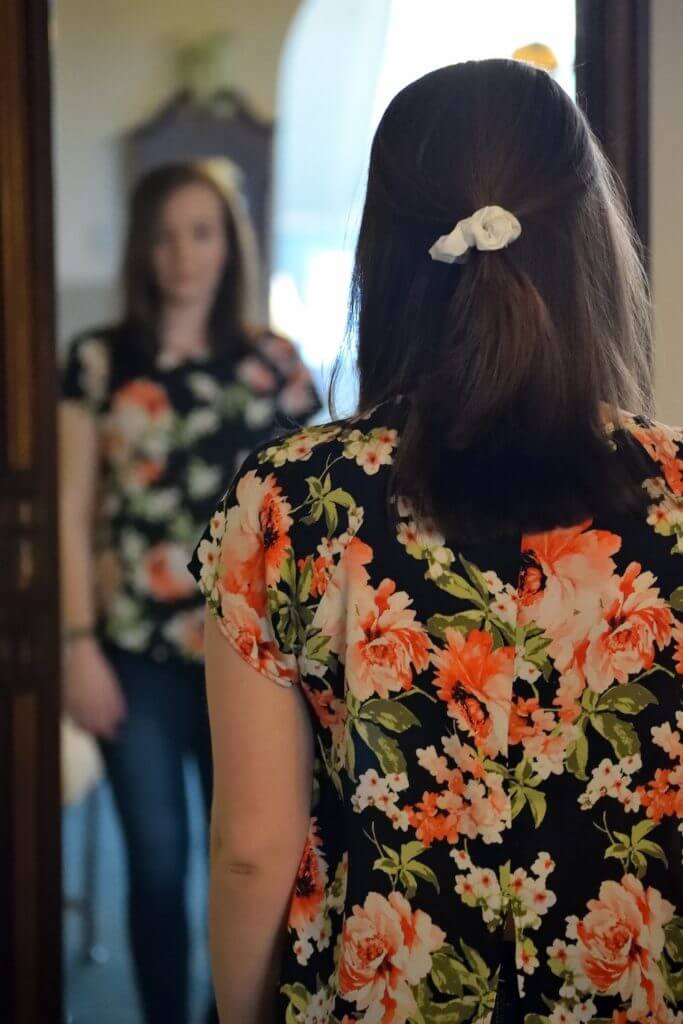
Consider living from the inside out. Touch everything you notice with your loving attention. The lines between inside and outside begin to blur as you open to the oneness of all.

image credit

Don’t Trust the Comparing Mind

“We cannot solve problems with the same thinking we used when we created them.”
~Albert Einstein

If you’re part of the human race, then your mind probably compares. It’s the nature of thoughts to divide the world into this and that, good and bad, better and worse.

The comparing mind tells you you’re not good enough and that others matter more than you. Comparing leaves us irritable about the weather, wishing for a better childhood, and striving for perfection.

Take a moment to feel into your comparing mind. How does it tell you that now is not good enough? How does it convince you of “if only”…if only your reality were different, then you would be successful, approved of, or just plain happy.

I have studied this comparing function in myself and many others, and here’s what I’ve concluded—comparing never makes us feel good.

Usually, we come up lacking. And even if we convince ourselves we’re special or better than others, we’re still caught in a story that makes us feel disconnected.

Check out how your mind functions for the next few days. My guess is that every time you feel badly in some way, you’ll find that comparing has taken hold.

In my experience, the comparing mind is harsh and makes us feel tense…and sad. Who wants to live feeling like others have the key to happiness while we’re left lacking?

So how do we find our way out of comparing and back to peace, love, and harmony?

It’s important to know that you won’t find the solution by staying entangled in your thoughts. This is the “if only” strategy—if only I were thinner or more successful, then I would feel better and stop comparing.

The solution is not in hoping to achieve something that you feel you don’t have now, as this will keep you striving forever. So, as Einstein says in the quote above, another approach is needed, which is to turn away from the whole comparing function of the mind so these thoughts don’t create your reality.

Comparing thoughts are veiling your true nature as peaceful, whole, and perfectly okay. When you don’t put your attention onto these thoughts, what happens? You realize you’re here, breathing in this moment, alive to your senses, not thinking about yourself and what you think you’re lacking.

Yes, the thoughts will probably return…and that is another golden opportunity to ignore what they tell you and open again and again to the reality that’s actually here…not the false one in your mind.

Don’t think yourself into being. Instead, stay still. Don’t move your attention into stressful thoughts. Look closer than the comparing mind to the living, expansive vibration of this now moment.

image credit

Reflections on the Concept of Other

other“The Great Way is not difficult for those who have no preferences. When love and hate are both absent everything becomes clear and undisguised. Make the smallest distinction, however, and heaven and earth are set infinitely apart. If you wish to see the truth then hold no opinion for or against. The struggle of what one likes and what one dislikes is the disease of the mind.”

~Zen Scholar Sengstan, from the Hsin Hsin Ming poem

The word “non-dual” means not two. It is used to describe the true nature of reality which is undivided, unified, and inherently whole.

Yes, we look around and see separate forms. There is this and that. I am here and you are over there. We perceive an amazing diversity of people and objects.

But when the layers of thought that divide and separate are seen through, the true direct experience of reality is just pure, formless, timeless aliveness…completely at peace with itself.

Yet, somehow we all know what it’s like to hold the idea of “other.” This means that we believe something is separate from ourselves. The other could be an object, a person, a category of people, or even our own thoughts, feelings, and behavior.

What we make into the other feels different, foreign or strange. We conclude that it’s “not me,” therefore it’s something else, something other than me. We may even add in a judgment about how what we’re calling other is wrong, bad, or less than.

And this is the source of a whole lot of trouble.

So here’s an essential question: if the true nature of reality is undivided, how does division happen?

How do we end up on different sides of an argument? How do we come to define ourselves or others as less than or better than? How do we divide ourselves from our own experience?

And most importantly, how do we convince ourselves that we—and others—are separate from the divine nature of all of life?

The roots of separation begin to take hold when we identify ourselves as the one who lives in the physical body.

Our true nature is boundless and free, but if we think of ourselves as limited to the body, then we’ve immediately created a sense of other.

Simply said, it’s our thoughts that create division. The human mind is designed to think…that’s what it does..and what an amazing tool it is.

But when we believe the content of our thoughts without questioning them, we leave the oneness and intimacy with all things and enter the world of judgment, comparison, and right and wrong.

Here’s how it works. If you believe you’re right, then the other must be wrong. If you believe yourself to be inadequate, then others must be better than you. If you like something, then you don’t like something else.

These functions of the mind help us to organize our experience. If we categorize people and things, then we know where we stand. But can you feel into the pain that arises from division?

Take away the mind’s distinctions, and what’s revealed is the bare experience of reality. Right here and right now, things are as they are. And feeling into it even deeper, the idea of separate things begins to melt away.

What is? Aliveness…here…pure being…everywhere…with no division.

And how would you create division again? Start thinking.

The mind can’t conceive of the true nature of reality. The infinite, all-inclusive spaciousness—nondual reality—can only be known by direct experience. It’s beyond language, palpable, real, so alive.

The mind tries to capture this knowing…by describing it, remembering it, or imagining it. And, ironically, when we believe these thoughts, we feel separate from it. We take what is, the endless peace of the present moment, and go into our minds to make it wrong, lacking, or not okay.

These are signs of a mind in charge. Turn away from these thoughts, and what do you discover? There’s no problem to be found.

Reflect for a moment on your experience of “other.” Be meticulous in your exploration to see what thoughts you believe that may not be true. How does separation feel?

Then try this experiment. Don’t believe what these thoughts are telling you, ground yourself in presence, and come back to experience the world deeply knowing the undivided nature of reality. How does that affect your view of yourself? How does that change your view of others?

Maybe, like me, your heart is touched endlessly…

Note: If you’d like to listen to a reading of the full Hsin Hsin Ming poem (highly recommended!), please click here. This is a lovely rendition read by Ram Dass. 

image credit

What to Do with Sticky Patterns

“Someone, who has realized the Truth of what he is, rather than what he has been conditioned to believe he is, will be smiling in every cell of his being. It is infectious.”

~ Mooji

A powerful insight is illuminated when we realize how much our conditioned patterns interfere with our happiness.

Many of these patterns have plagued us for years, and no matter what we try, they seem to take hold and not let go.

We hear about freedom as a possibility, but we just don’t know how to find our way there. And meanwhile, the patterns keep getting played out in our minds, our emotions, our relationships, and our choices in life.

First, it’s important to understand that deeply embedded patterns usually take time to unwind. You’re expressing tremendous self-compassion when you commit to working with them as much as you can whenever they arise. Because that’s what is needed for you to experience the peace and happiness you know are possible for you.

The goal is not to get rid of these tendencies. So when they reappear—and they will—it doesn’t mean that you’re doing something wrong. If they’ve been played out without much awareness for a long time, they are highly reinforced. This means they have a strong momentum to keep arising.

So what is your goal? To bring conscious awareness to these patterns as they are occurring and to relate to them with understanding, wisdom, and love. Because this is what softens them.

Love for the patterns? Yes, you read that right. These conditioned tendencies aren’t evil. Behind them lies a heartfelt motive to protect yourself and to avoid pain.

Do you smoke and want to stop? You’re probably trying to find a sense of inner calm. Do you feel like a victim? Maybe you’re hiding from some painful feelings. Do you put up barriers to intimacy in your relationships? You’re trying to stay safe inside.

And as convoluted as it may be, even getting angry at someone is an attempt to make them stop what they’re doing so you will feel peaceful.

As your desire for true peace and happiness grows, you realize that these patterns aren’t working for you. They had a helpful intention when they came into being years ago, but now is the sacred time when you’re ready to move beyond them.

Because you are way more magnificent than your patterns will tell you.

We sometimes don’t know where to start. So today I’d like to share with you a framework for working with these sticky patterns that I call top down and bottom up.

Top Down

Top down means that you recognize the behaviors that aren’t working for you and you experiment with changing them.

Imagine acting as if you were someone who wasn’t caught in this particular pattern. What would that person do? How would they feel inside? What would they think?

Enjoy the possibility of stepping way out of the limited reality of the pattern.

Suppose that you’re free of this pattern—what would you do differently in any given moment? Give yourself some time for this reflection, and be as specific as possible.

Then experiment with embodying your newfound insights. Take a breath and open to your present moment experience (not the reality in your head). Look into your loved ones eyes before responding. Consider the whole and not only yourself. (This is one I’m working on.)

Then take in how these new ways of being feel in your body—because they will feel different. This is what happens when deeply held patterns begin to shift.

Bottom Up

Along with top down, is bottom up. And here is the invitation to be so kind to yourself in meeting whatever emotions underlie these patterns. Often you’ll find longstanding fear, hurt and sadness, or a deep sense of lack.

If these feelings are ignored, they will continue to fuel the pattern. As you turn toward them with loving attention—a lot—they begin to get what they need. They calm down and soften. The nervous system starts to relax.

Then without the fuel of unexplored emotions, especially combined with the new behaviors you’re practicing from top down, amazingly you begin to experience that these patterns don’t have to define you.

In my experience, it feels like an inner revolution is starting to take place. I’ve felt a certain way for so long, then the pieces inside begin to move. I feel unfamiliar in my body—in a wonderful way. I’m in a space of not knowing how to be without that old identity, which feels so fresh!

There’s expansion and lightness in my whole being.

Maybe you’ve felt like a victim of your patterns for a long time. And here’s the truth: your experience of them can change. Try top down and bottom up. You’re creating the fertile soil for an inner revolution.

image credit

Ease and Flow in Uncertain Times

“If uncertainty is unacceptable to you, it turns into fear. If it is perfectly acceptable, it turns into increased aliveness, alertness, and creativity.”
~Eckhart Tolle

Who would ever have guessed that we would get a crash course in uncertainty? Well, here we are.

A global pandemic, the health of everyone in the world at risk, including ourselves and our loved ones… Wow!

One question on my mind is about how to meet the uncertainty we’re all facing. And there is a lot of it.

What is going to happen? Who will be affected? When will this disruption end so we can get back to “normal?” How will it end?

Uncertainty means that we don’t know. We just don’t know the answers to these questions.

And for many of us, not knowing fuels the fear lying at the core of how we view ourselves. Everything is threatened—our preferences for how things should be, our life situation defined by roles and relationships, our finances, and even our physical bodies.

Our familiar ground starts to feel quite shaky.

Here are some points for you to contemplate: if you think you control your life, you don’t. If you think you and those you love are going to live forever, they won’t. If you think your world can’t change in a heartbeat, it can.

The tragedies that mark the nature of human civilization don’t just happen to others. Now we’re all facing one.

We’re attached to normalcy, taking the most fundamental aspects of our lives for granted. And now they’re up for grabs.

Whether we want it or not, we’re being given one gigantic invitation to investigate our attachments. What are you going to do with this invitation?

I’ve shined the light on many attachments over the years, seeing them, feeling into what it’s like to be attached, and considering what it would be like to let them go. It’s been a fruitful exploration of fear, loss—and ultimately freedom.

We are always in some kind of relationship with our experience. We might swirl in our minds’ stories while we miss the feelings that drive them. We shame ourselves for our reactions, rather than welcoming them. We desperately want what we want while we resist the truth of what we’re given.

Or we can be conscious of what arises in our inner landscape with curiosity…and tenderness.

Many of us are terrified of our reactions. We don’t want to face loss and change. We don’t want to feel out of control.

I can tell you from experience that fighting what is only makes you struggle more. When we relax a bit and begin to embrace the deeper reality of things, there’s a natural softening.

And softening the hard edges of our resistance brings spaciousness and flexibility, if only for a while as we surf the waves of our reactions.

No longer locked into the fight with ourselves, there’s room for more. As the field of what’s possible expands, we notice a deeper understanding, compassion and acceptance even in the midst of painful feelings, the flow of generosity, and creative responding that includes the whole.

Uncertainty is about the future, and exploring it brings us right here to our present moment experience.

We stay informed and make intelligent decisions based on love for all (e.g., social distancing even if it’s inconvenient). We welcome our reactions and resistances. We consider taking breaks from filling our heads (and bodies) with the news.

And we remind ourselves to watch the leaves blowing in the wind…notice our chest rise and fall with the breath…appreciate our time with family, friends, and pets…and embrace the abundance of all that’s given.

image credit

« Previous Page
Next Page »

Blog Archives

Recent Posts

07.19.22

Too Much Thinking? Four Insights to Guide You to Freedom

07.07.22

A Compassionate Guide to Forgiving Yourself

06.26.22

Slowing It Down

Too Much Thinking? Four Insights to Guide You to Freedom

“Don’t wait for your mind to be quiet.” ~Mooji "All the things that truly ...Read More

A Compassionate Guide to Forgiving Yourself

“You yourself, as much as anybody in the entire universe, deserve your love and ...Read More

Slowing It Down

“When we slow down, quiet the mind, and allow ourselves to feel hungry for ...Read More

  • Home
  • About
  • Read
  • Watch
  • Listen
  • Events
  • Media
  • Contact
  • Privacy Policy

My Name, All Rights Reserved

Website by Web Savvy Marketing